Your home boiler system is the silent hero of your home when it comes to heating. They’re tucked away, but they’re responsible for your hot water and radiant heat. You wouldn’t be able to do a lot of things without a boiler, which is why it’s important to choose the right one. This guide will detail high-efficiency boilers and cast iron boilers, helping you decide which one will fit best into your unique lifestyle.
What are Cast Iron Boilers and High-Efficiency Boilers?
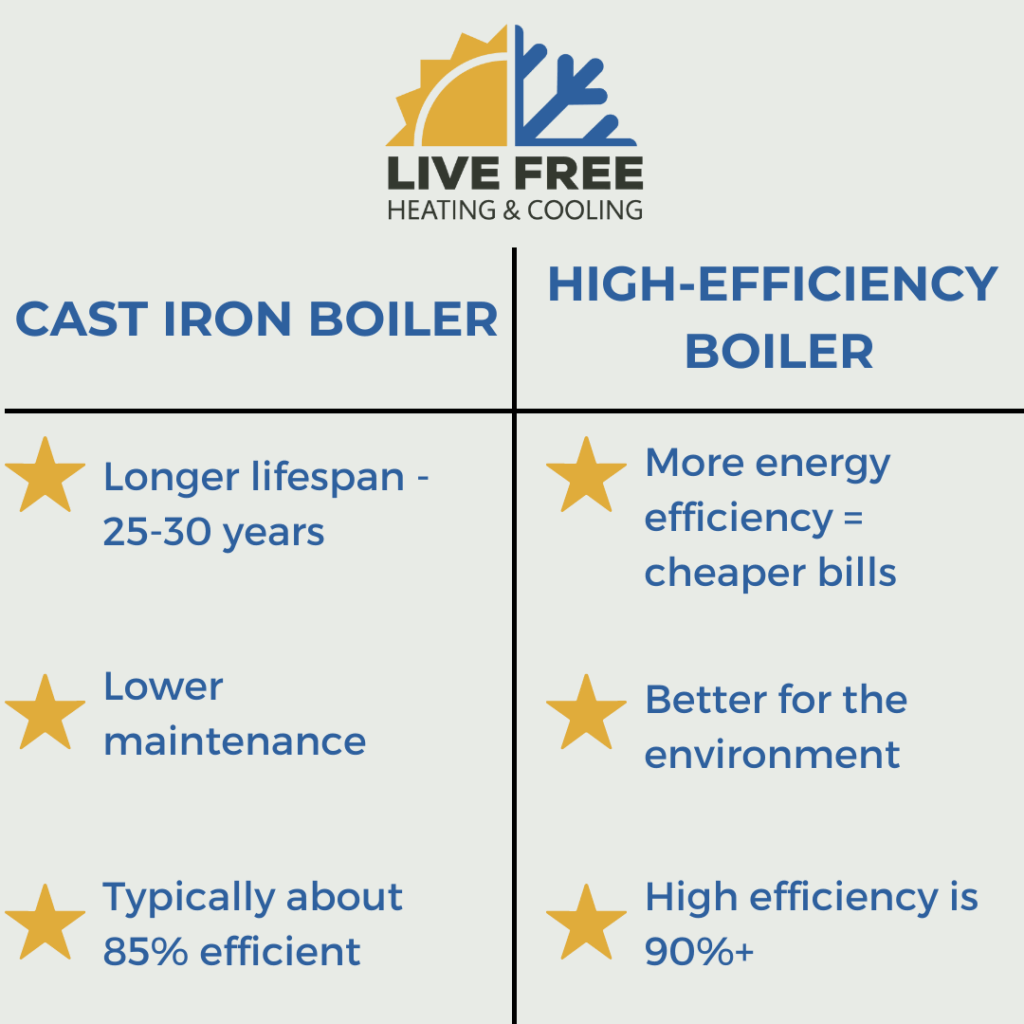

You might think of cast iron boilers as old-fashioned. However, most boiler manufacturers still make them similarly to how they did decades ago. These are heavy and durable boilers that have a lifespan of 30+ years. Cast iron boilers run at standard efficiency which is about 80-85%.
High-efficiency boilers are just that- higher efficiency. The heat exchangers are typically stainless steel or aluminum. You may have also heard of condensing boilers, which are usually a part of high-efficiency systems. These boilers have a shorter lifespan of 15-20 years. However, they work at 90%+ efficiency and can slash up to 30% of your heat bill.
So which one is right for you? The tried-and-true cast iron boiler, or the energy saving high-efficiency boiler? Here are some pros and cons to each.
Cast Iron Boilers: Pros and Cons
Cons
Cast iron boilers run at standard efficiency, so you’ll miss out on the savings a high-efficiency boiler can bring. This might be frustrating if you need a lot of heating and usually end up with a larger bill.
Pros
Cast iron boilers are cheaper upfront and easier to install, so it’s the more accessible option of these two. They can last nearly twice as long as a high-efficiency boiler, so you might also save money with less frequent installations. Longer warranties, like 25-year and limited lifetime, are common with cast-iron boilers.
High-Efficiency Boilers: Pros and Cons
Cons
High-efficiency boilers sound like the better option because they’re simply higher efficiency, but they’re not a right fit for absolutely everyone. They have higher upfront costs and stricter installation requirements. If you get a high-efficiency boiler, you’ll want a certified and reputable company to do the job, otherwise, you could run into issues.
Maintenance is important to extend lifespan. High-efficiency boilers have a shorter lifespan than cast iron. High-efficiency boilers might require a bit of extra care as compared to cast iron boilers.
Pros
The biggest pro to high-efficiency boilers is the savings. On top of cheaper energy bills, you might qualify for federal or state rebates. The higher upfront cost is an investment that definitely pays off!
The lifespan of a high-efficiency boiler may be less than that of a cast-iron boiler, but it’s still long. If you are looking to decrease your carbon footprint while saving money every month, a high-efficiency boiler will be a better fit for you. Condensing boilers can give you even higher efficiency and more savings each month.
Which One Should You Choose?
Both of these options can be economical when you maintain them properly. The high-efficiency boiler has amazing energy savings and the cast iron boiler has that long-lasting quality. The right one for you depends on the benefits that you’d appreciate the most in your day to day life.
If you want to fight back against rising energy prices, the high-efficiency boiler may be your best fit. If you want to install a boiler that will last a very long time and find your energy efficiency elsewhere (like with solar power), a cast iron boiler might be the one for you.
Another great way to decide is by recruiting the professionals. Need installation, service, or maintenance for gas or oil boilers in New Hampshire? Live Free Heating Cooling Electric has got you covered. We offer free estimates (terms apply) and expertise that helps you achieve your most comfortable home.