
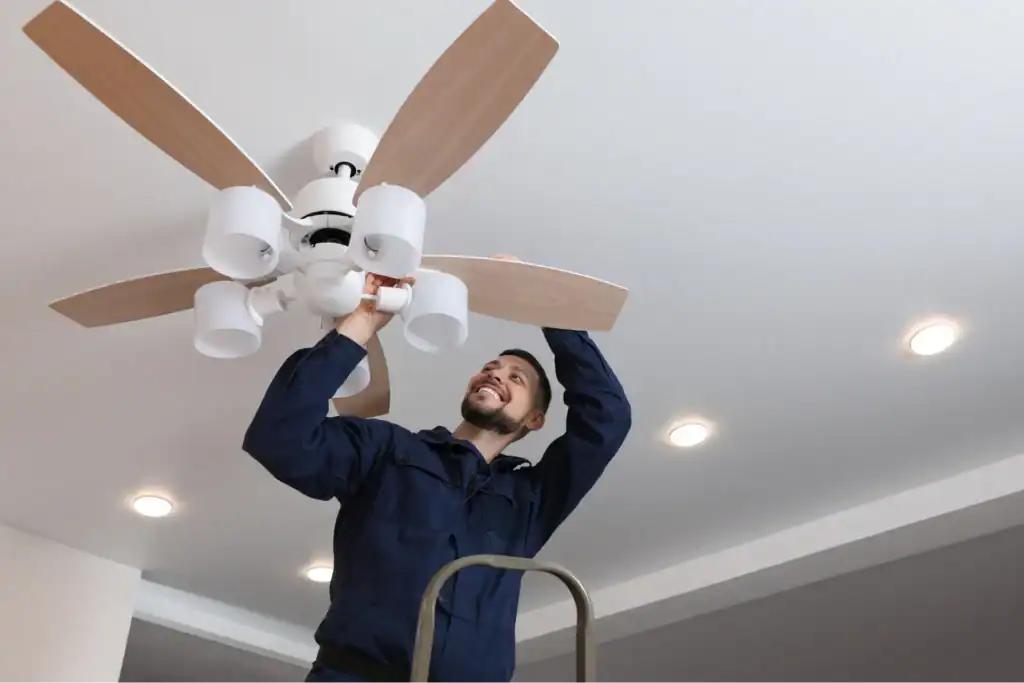
In winter, set your ceiling fan to spin clockwise (as you look up at it) on its lowest speed. This creates a gentle updraft that pushes warm air off the ceiling, down the walls, and back into the room without a draft.
Even with the heat running, you might feel cold air around your ankles. Warm air rises, so heat collects near the ceiling while the rest of the room stays cool. Switching your ceiling fan direction in winter is a free way to move that heat back down where you can feel it.
At Live Free Heating, Cooling, Electric & Plumbing, our electricians install and repair ceiling fans, and our technicians service the heating systems those fans work with. Reversing a fan takes about a minute. If a room still feels cold afterward, our team can help track down the cause.
Why Ceiling Fan Direction Matters for Winter Heating
Warm air is lighter than cool air, so it rises toward the ceiling. In rooms with high or vaulted ceilings, the air up top can be noticeably warmer than the air at floor level. When the fan sits idle, that heat stays trapped overhead.
How Blade Direction Changes Airflow
Ceiling fan blades sit at a slight angle. In summer, they spin counterclockwise to push air straight down, which creates a cooling breeze. Keep that setting in winter and the same breeze makes the room feel colder.
Running the blades clockwise reverses the airflow. The fan pulls cool air up from the floor, which pushes warm air along the ceiling out to the walls. That warm air then flows down the walls and across the floor without blowing on anyone below.
How to Switch Your Ceiling Fan to Winter Mode
- Turn the fan off and wait for the blades to stop completely.
- Find the small direction switch on the motor housing, usually on the side below the blades.
- Slide the switch to the opposite position. If your fan uses a remote or wall control, press the reverse button instead.
- Turn the fan back on at its lowest speed and confirm the blades turn clockwise as you look up.
Keep the fan on low. Higher speeds create a draft and work against you. ENERGY STAR recommends running ceiling fans clockwise at low speed in winter. A fan on low uses far less electricity than your heating system, so you may be able to lower the thermostat slightly and stay comfortable.
When spring arrives, switch the fan back to counterclockwise for a cooling breeze.
When the Fan Will Not Cooperate
Never force a stuck direction switch. Doing so can break the internal contacts and damage the motor. A fan that hums, buzzes, or wobbles often needs electrical repair, such as a new capacitor, rebalanced blades, or tightened brackets. If a room has no fan at all, our team handles ceiling fan installation in Concord, NH and nearby towns, including fan-rated ceiling boxes and wall switches.
Still Cold After Reversing Your Ceiling Fan?
A ceiling fan can only move the heat that is already in the room. If a room stays cold with the fan running clockwise on low, the cause may be your heating system, the room’s layout, or drafts around windows and doors.
Signs the issue may be your heating system:
- One room is always colder than the rest of the house.
- Upstairs and downstairs feel very different in temperature.
- Your furnace, boiler, or heat pump runs constantly, but the house never feels warm.
- A finished attic, bonus room, or addition was never connected to the main heating system.
Rooms far from the furnace or added after the original system went in are common trouble spots. A ductless mini split can heat one problem room on its own without new ductwork. If the thermostat sits in a warm hallway, it may shut the heat off before the far rooms warm up, so moving or upgrading it can help. If your system struggles on the coldest nights, heating maintenance shows whether it still has enough capacity for your home.
When a Ceiling Fan Is Not Worth Running in Winter
In rooms with low ceilings, even the lowest clockwise speed can push air down the walls fast enough to feel drafty. In small rooms with standard ceilings, heat often spreads well enough on its own. In those spaces, leaving the fan off is usually the better choice.
Check the Ceiling Box Before Adding a Fan
In older homes across southern New Hampshire, including towns like Auburn, Candia, and Raymond, some ceiling boxes were installed to hold light fixtures only. They are not rated for the weight and vibration of a ceiling fan. An electrical safety inspection can confirm the box is fan-rated and secured to the ceiling framing before a new fan goes up.
Frequently Asked Questions
Which Way Should a Ceiling Fan Spin in Winter?
Clockwise, at low speed. This pulls cool air up from the floor and pushes warm air down along the walls. Keeping the speed low prevents an uncomfortable breeze.
Should a Ceiling Fan Spin Clockwise or Counterclockwise in Winter?
Clockwise. Counterclockwise rotation pushes air straight down and creates a cooling breeze on your skin, which makes the room feel colder in winter and can lead you to turn up the thermostat.
Do Ceiling Fans Help Heat Rooms With Vaulted Ceilings?
Yes. High and vaulted ceilings collect a lot of rising heat that would otherwise stay out of reach. Running the fan clockwise on low pushes that warm air back down, so the room feels more even from floor to ceiling.
Why Is One Room Still Cold With the Ceiling Fan Reversed?
A fan only moves heat that is already in the room. A room that stays cold may be too far from the furnace, missing a heat source, losing heat through drafts, or affected by thermostat placement. A heating technician can check the system and recommend options like a ductless mini split for that room.
Why Is My Ceiling Fan Wobbling or Humming?
Wobbling usually comes from loose mounting brackets, warped blades, or a ceiling box not rated for a fan. Humming often points to an aging capacitor or an incompatible wall dimmer. An electrician can inspect the fixture, balance the blades, and repair the wiring.
Room Still Cold This Winter?
Whether your fan needs repair or your heating system is falling short, the licensed professionals at Live Free Heating, Cooling, Electric & Plumbing can help. We dispatch from Concord, NH, with upfront pricing and military discounts on heating and electrical services. Contact our team to schedule service.
For more ways to manage heating costs, read our winter energy saving tips for New Hampshire homes.