
A drop in water pressure limited to a single fixture is usually caused by mineral buildup in the aerator, while sudden low water pressure across multiple rooms in the house typically points to a failing pressure reducing valve, a hidden supply leak, or severely corroded piping.
Diagnosing Water Flow Issues in New England Homes
When you notice low water pressure in your house, the first step is to find out whether one fixture is affected or the whole plumbing system. If a single faucet loses force, clearing out mineral deposits or scheduling professional plumbing repair in Concord, NH can restore proper flow.
The team at Live Free Heating, Cooling, Electric & Plumbing helps homeowners identify mechanical failures and pipe restrictions before minor plumbing problems get worse. From comprehensive plumbing services to advanced diagnostics, experienced technicians trace supply problems back to their source.
What Causes Low Water Pressure Across Household Fixtures?
Understanding what causes low water pressure begins with checking the control valves that regulate incoming water. Every municipal water supply enters the home through a main shutoff valve, and many homes utilize a pressure reducing valve to keep incoming municipal force within safe operating limits.
If the main shutoff valve was partially turned during recent utility work or home improvements, water volume drops instantly across every fixture. Pressure reducing valves contain internal springs and diaphragms that wear out over time, causing sudden low water pressure throughout the house when the internal mechanism jams.
On individual fixtures, mineral accumulation inside aerators and showerhead screens creates isolated restrictions, which can mimic broader distribution failures.
Physical piping issues represent another major structural cause of volume loss throughout older residences. Homes built with galvanized steel or aging copper lines often suffer from internal corrosion and scale accumulation that gradually chokes water flow, leaving narrow pathways for water to travel.
In other cases, an undetected crack or underground rupture diverts water away from your fixtures entirely. When volume drops unexpectedly without valve interference, scheduling professional leak detection allows technicians to find hidden supply line leaks without invasive demolition.
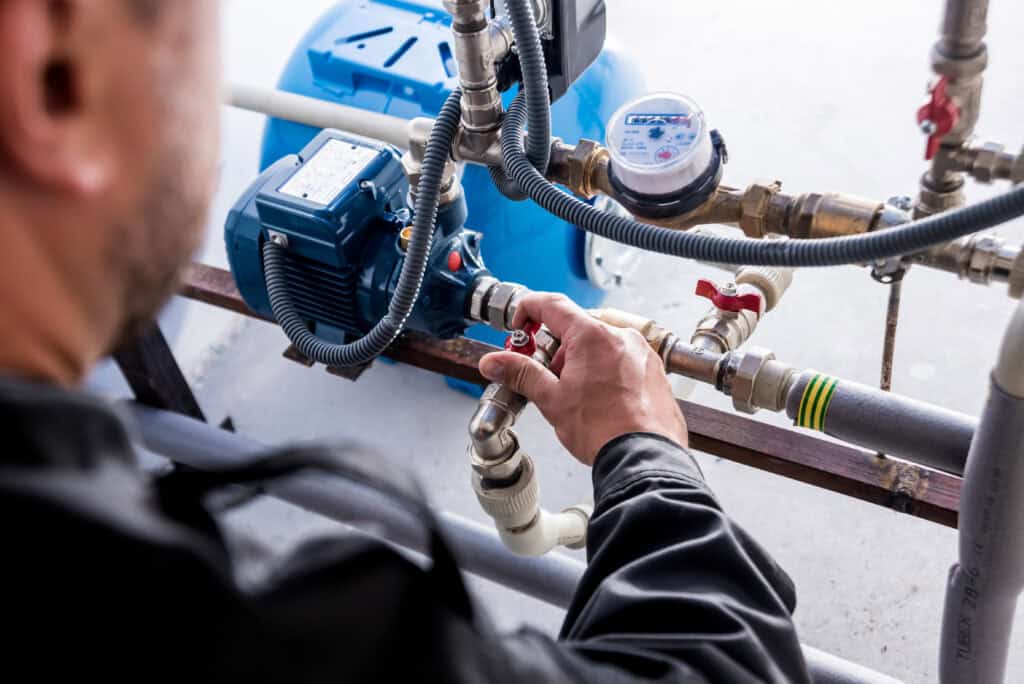
In homes relying on private well systems rather than municipal mains, a failing well pump, a waterlogged pressure tank, or a faulty pressure switch can also trigger noticeable pressure drops.
When volume drops only during hot water usage, the issue is usually in the water heating system rather than main supply lines. Over months of regular heating cycles, calcium and mineral sediment settle at the base of conventional tank water heaters and collect in heat exchangers.
This dense buildup restricts supply lines leaving the appliance, creating low hot water pressure at faucets and showers while cold water continues to flow with standard force. Flushing the tank or addressing damaged shutoff valves on the hot water supply line restores proper balance to the household.
Professional Solutions: Restoring Strong Water Flow
Fixing persistent low water pressure throughout the house requires targeted repairs based on the exact root cause identified during inspection. While simple fixture clogs require only aerator cleaning or cartridge replacement, system-wide volume loss calls for specialized equipment and licensed plumbing expertise. Technicians use calibrated pressure gauges to test static and dynamic water pressure, adjust or replace failing pressure reducing valves, and inspect main supply piping. For older properties dealing with extensive interior rust, mineral buildup, or recurrent pinhole leaks, investing in whole-house repiping in Concord, NH provides a long-term fix by replacing compromised pipes with modern PEX or clean copper.
- Calibrated Pressure Testing: Technicians measure intake pressure and internal line resistance to pinpoint whether drops happen at the street, the meter, or within interior branches.
- Pressure Reducing Valve Calibration: Installing and properly calibrating a new brass pressure reducing valve stabilizes incoming municipal flow and protects sensitive household appliances.
- Modern Pipe Replacement: Upgrading deteriorated galvanized lines to durable PEX or copper removes internal scale choke points and lowers the risk of sudden pipe bursts.
- Water Heater System Optimization: Thoroughly flushing mineral sediment from tank and tankless systems clears restrictions that choke domestic hot water lines.
- Main Shutoff Valve Replacement: Upgrading stiff or corroded gate valves to full-port ball valves allows full water flow and gives you a dependable emergency shutoff.
A full system walkthrough helps confirm that each fixture gets steady pressure, even when several fixtures or appliances run at once.
Water Quality and Well System Factors
Beyond mechanical valve failures and aging pipe material, mineral content in regional groundwater plays a major role in long-term flow degradation. Dissolved minerals such as calcium, magnesium, and iron gradually form hard scale inside water supply pipes, water heaters, and fixture cartridges.
Over time, these mineral layers narrow the interior diameter of copper and brass plumbing lines, restricting overall water volume even when municipal or well pump pressures remain adequate. Installing whole-home water filtration or softening equipment helps prevent progressive scaling and protects plumbing infrastructure from premature wear.
In rural and suburban areas around Boscawen, Contoocook, and Hopkinton, many residential properties rely on private well systems that introduce unique pressure variables. Private well setups depend on a submerged pump, an electromechanical pressure switch, and an expansion pressure tank to maintain household line force.
If the internal bladder of a well pressure tank fails or becomes waterlogged, the well pump short cycles rapidly, causing erratic water delivery and noticeable pressure swings during routine use. Regular diagnostic checks verify that well tanks maintain proper air pre-charge and that pressure switches engage cleanly.
Frequently Asked Questions
Why Did My Home Suddenly Lose Water Pressure?
Sudden water pressure loss across an entire home usually indicates a partially closed main shutoff valve, a failed pressure reducing valve, or a significant supply line leak. If your home uses municipal water, unexpected utility line repairs or neighborhood main breaks can also cause immediate drops in water force. Checking with neighbors and examining your main valve helps determine whether the failure is local or citywide.
Can a Bad Water Heater Cause Low Water Pressure?
A malfunctioning or sediment-filled water heater can cause low water pressure, but the drop usually affects only the hot water taps. Mineral scale accumulates at the bottom of the water heater tank and inside exit fittings, severely restricting flow to hot water lines throughout the home. Cold water taps will continue to run with normal pressure if the problem is confined to the water heater.
How Do I Know If My Pipes Need Whole-House Repiping?
Persistent low water pressure across all fixtures in a home with galvanized steel or aging copper pipes often indicates severe internal corrosion and scale buildup. If your water looks discolored or tastes metallic, or you have had several pinhole leaks, the pipes may be corroded past the point where repairs make sense. A professional plumbing inspection can confirm whether pipe replacement is necessary to restore healthy water flow.
Does Hard Well Water Affect Indoor Water Pressure?
Hard well water contains elevated levels of calcium and magnesium that gradually deposit scale inside plumbing lines and fixtures. Over several years, this mineral accumulation narrows the interior diameter of supply pipes, aerators, and showerheads, leading to diminished water volume. In addition, mineral sediment can clog well pump intake screens and foul pressure tank switches.
Struggling With Low Water Pressure in Your Home?
Weak water flow should not disrupt your daily routine. The licensed professionals at Live Free Heating, Cooling, Electric & Plumbing provide thorough diagnostics and upfront pricing across Concord, NH and nearby communities, with a military discount for service members and veterans. As temperatures drop, read our guide on keeping pipes from freezing.
Contact us today to schedule your diagnostic walkthrough.