If you smell gas in your house, get everyone out right away. Don’t flip light switches or use anything that could make a spark on the way out. Once you’re outside and away from the house, call your gas utility’s emergency line or 911. Stay out until the utility or fire department tells you it’s safe to go back in.
A gas smell is one of the few home problems where you shouldn’t try to find the cause first. Natural gas has no smell of its own, so gas companies add an odor that most people describe as rotten eggs or sulfur. That smell is your signal to leave. The steps are the same whether you smell gas in your house, garage, or basement.
Late fall is when many New Hampshire homeowners start up a furnace, boiler, or gas fireplace that sat unused all summer. Knowing the steps ahead of time makes it easier to act fast if you ever notice the smell. Before the first cold snap, getting your heater ready also gives you a chance to catch worn connections early.
What a Gas Leak Smells Like and Other Warning Signs
Most people say a gas leak smells like rotten eggs or sulfur. The smell can be faint or strong, and you should treat both the same way. You may also notice other signs of a gas leak:
- A hissing, whistling, or blowing sound near a gas appliance, pipe, or meter
- Dead or dying grass or plants over a buried gas line in an area that is otherwise green
- Bubbles in standing water or a puddle near a gas line
- Dirt or dust blowing up from the ground
Where Gas Leaks Start in a Home
Inside the house, gas usually escapes at a connection or a control rather than from the middle of a pipe. Common sources include:
- A stove or oven burner that was left partly on
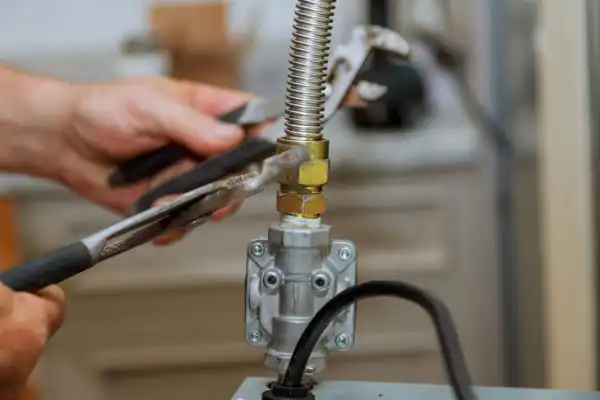
- A loose or worn flexible connector behind a range, dryer, or water heater
- Leaking joints, fittings, or valves on the gas line to a furnace or boiler
- Corroded or damaged piping, including outdoor lines hit while digging
Knowing these sources helps a technician later. It isn’t a reason to look for the leak yourself while you smell gas.
What to Do If You Smell Gas: Step by Step
Follow these steps in order. Gas utilities in New Hampshire give the same basic instructions.
- Leave the house now. Get everyone out, including pets.
- Do not flip light switches, unplug anything, or use appliances, a flashlight, or the garage door opener on the way out.
- Do not light matches, lighters, or candles, and do not smoke.
- Leave windows and doors as they are. Do not stop to open windows, and do not go back inside to open them.
- Move well away from the house. New Hampshire gas utilities recommend going at least 300 feet away.
- Call your gas utility or 911 from outside, using a cell phone or a neighbor’s phone.
- Do not try to find the leak or turn off the gas meter yourself.
- Do not go back inside until the utility or fire department tells you it’s safe.
Who to Call in New Hampshire
Your gas bill shows which company supplies your gas and lists its emergency number. If you don’t know, call 911.
- Liberty Utilities: Liberty Utilities supplies natural gas in Concord and many other New Hampshire towns. Call the Liberty Utilities gas emergency line or 911. Liberty Utilities also posts its gas leak steps online.
- Unitil: Unitil supplies natural gas in parts of southern New Hampshire, including the Seacoast. It asks customers to call 911 once they reach a safe place, then call Unitil’s gas emergency line.
- Propane: If you smell propane in your house or near an outdoor tank, leave first, then call your propane company’s emergency number. If you can’t reach the company, call 911. If you can reach the shutoff valve on an outdoor tank without going back inside, turn it clockwise to close it.
If anyone in the house feels dizzy, sick to their stomach, or has a headache, call 911 as soon as you are outside.
What Else Causes a Rotten Egg Smell in the House?
If you notice a rotten egg smell, treat it as a gas leak until the gas utility or fire department checks your home. If they find no gas, the smell is most likely coming from your plumbing.
Hot Water That Smells Like Rotten Eggs
If the smell only comes from your hot water faucets, the water heater is the likely source. Sulfur bacteria in the tank can turn sulfate in the water into hydrogen sulfide, a gas that smells like rotten eggs. The tank’s metal anode rod can speed up that reaction. A plumber can flush the tank and replace the anode rod during water heater service.
A Dry Drain Trap
Every drain has a U-shaped trap that holds water and keeps sewer gas out of the house. When a floor drain, basement shower, or guest bathroom sink goes unused for weeks, that water can evaporate. Run water down the drain for about a minute to refill the trap. If the smell comes back, a plumber can check the drain and vent for a problem.
Can You Smell Carbon Monoxide?
No. The Centers for Disease Control and Prevention describes carbon monoxide as an odorless, colorless gas, so you can’t smell it. That means a carbon monoxide problem needs a different warning than a gas leak. A furnace, boiler, or water heater that isn’t burning or venting correctly can put carbon monoxide into your home with no gas smell at all.
The Centers for Disease Control and Prevention lists the most common symptoms of carbon monoxide poisoning as headache, dizziness, weakness, upset stomach, vomiting, chest pain, and confusion. If a carbon monoxide alarm goes off or anyone has these symptoms, get everyone outside and call 911.
A yearly heating tune-up is a good time to have your system checked for venting problems that could let carbon monoxide into the house.
Frequently Asked Questions
What Does a Gas Leak Smell Like?
Most people describe it as rotten eggs or sulfur. Gas companies add this odor because natural gas has no smell on its own. If you notice it inside, leave first and call from outside.
Is a Faint Gas Smell an Emergency?
Yes. Treat a faint gas smell the same way you would treat a strong one. You can’t tell from the smell how much gas has built up, so leave and call your gas utility from outside.
Should I Open Windows If I Smell Gas?
No. Liberty Utilities tells customers to leave windows and doors as they are and not to go back inside to open windows. Get out first and let the gas utility handle ventilation.
Can I Turn Off the Gas Meter Myself?
No. Unitil, Liberty Utilities, and the New Hampshire Department of Energy all tell customers not to turn off the gas meter. Leave the meter and the valves to the gas utility. Propane is different: you can close the valve on an outdoor tank if you can reach it safely.
What Are Gas Leak Symptoms?
The gas company finds the source and makes the area safe, which can mean shutting off gas to the leak. If the leak is in your home’s piping or at an appliance, don’t relight pilot lights or use that appliance until a licensed technician repairs it.
Why Should I Keep My Gas Meter Clear of Snow?
Liberty Utilities asks customers to keep the area around the gas meter clear of snow and ice in winter. A clear path lets the utility reach the meter quickly in an emergency. Add it to your winter home maintenance checklist so it gets done after every storm.
Gas Leak Repair After Your Home Is Safe
Whether your fan needs repair or your heating system is falling short, the licensed professionals at Live Free Heating, Cooling, Electric & Plumbing can help. We dispatch from Concord, NH, with upfront pricing and military discounts on heating and electrical services. Contact our team to schedule service.