
Cooling your home can be an expensive, complicated process. In certain situations, avoiding ductwork can save money and simplify your AC. How do you get AC without ducts? There are plenty of ductless systems out there that boast of being more streamlined than traditional systems. Comparing ductless mini-splits vs. portable air conditioners can clarify your decision for a seamlessly cooled home.
How Do You Get AC Without Ducts?
Firstly, it’s important to know the distinction between a ductless AC system and one that uses ductwork.
Most homes use a central air conditioning system with indoor and outdoor units that bring cool air in through ducts and vents. Although it’s a very effective, economical, and permanent option, ducted AC is typically more expensive to install and maintain. It requires more maintenance since there are many internal parts, and any problems with the system will affect the cooling of the entire house.
Ductless AC systems can be a great option in certain situations. If you have a smaller space to cool or want to control each room individually, going ductless might be for you.
Mini-Split vs. Portable Air Conditioner: Pros and Cons
What is a ductless mini-split system? Like traditional systems, mini-splits have indoor and outdoor units. The two units connect via a small pathway drilled into the wall.
You can connect as many as 5 indoor units to the outdoor unit. Each room can be cooled differently, unlike a ducted system that controls the entire home.
Are portable air conditioners the same thing as a window unit? Window AC units cool one room and neatly fit inside windows. Portable air conditioners work the same way by cooling the room that they sit in. However, they are placed on the floor with a hose that attaches to the window.
Portable air conditioners de-humidify the rooms that they are in and come with a condensate pan that needs emptying from time to time.
Portable Air Conditioners

Pros: Portable air conditioners are the second least expensive type of AC unit to install, right behind window units. They work as de-humidifiers, helping optimize your air even further. They are a great option in the short-term, since they are easy and inexpensive to install.
If you’re still deliberating on what permanent AC system to choose, a portable air conditioner can tide you over. You can move it room to room. It’s super customizable and flexible to fit your cooling needs.
If you live in an area where summer doesn’t get too hot, a portable AC system might be just enough to cool your home throughout the summer. The convenience and low price can’t be beat in those situations!
Cons: Portable AC units look clunkier and you have to place them amongst your furniture. You’ll have to detach the hose from its respective window if you want to let some fresh air inside. They tend to be louder than ductless mini-splits.
They cannot cool an entire home, only a certain area, depending on the size. Portable AC units are not built to last as long as mini-splits- they are meant to be used as a short-term solution.
Mini-Splits
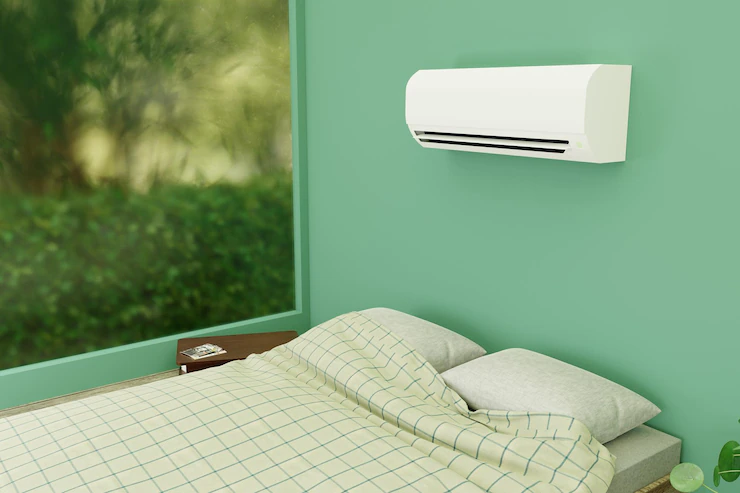
Pros: When comparing a mini-split vs. portable air conditioner, a mini-split is a more permanent and long-term solution. It is more budget-friendly to use a ductless mini-split system than to convert to central air.
Mini-splits mount on the wall above eye-level, so they don’t clutter a room. They tend to look more discreet than portable air conditioners. What’s more is that you can place the outdoor portion of the system up to 50 feet outside the home to customize the look.
On top of that, a ductless system does not connect to the window. This means you can open up your windows whenever you like to give your AC system a break and enjoy the balmy air. Mini-splits also have heating capabilities, so you won’t have to switch systems when winter comes around.
You can also control mini-splits wirelessly with remotes and timers, so they are a super convenient and comfortable option.
Cons: Ductless mini-splits are the most expensive way to cool your home without ducts. The installation is more extensive than that of a portable air conditioning system. If you live in a colder climate, it might be excessive to use a mini-split system- portable air conditioners might be just enough for a short summer.
Mini-Split vs. Portable Air Conditioner: Which is Better?
If you’re looking for effective, efficient, customizable, and permanent cooling and heating, a mini-split system might be best for you. If you don’t need long-term cooling, portable air conditioners might be the best option for you.
Here at Live Free Heating Cooling Electric, we offer services for all types of AC units in New Hampshire. Having a problem with your air conditioning? Chat with us for a free estimate (terms apply). Our experts can install, repair, and maintain your units for a cool home all summer long.